
How to clean Victorian tile floors
Victorian floor tiles remain one of the defining features of many period properties throughout Edinburgh and Scotland. Whether your floor is geometric, encaustic or mosaic, careful cleaning can dramatically improve its appearance while preserving its historic character.
Unfortunately, many original Victorian floors have been damaged by well-intentioned cleaning using unsuitable chemicals, excessive water or abrasive pads. In many cases, the dirt visible on the surface is not simply everyday grime but decades of old wax, failed acrylic sealers, polish residues and other coatings that have gradually built up over time.
The key to successful Victorian floor tile cleaning is understanding the condition of the floor before selecting a cleaning method appropriate for the original materials and previous surface treatments.
Before and After – Professional Victorian Floor Tile Cleaning in Edinburgh
Victorian floor tiles can become heavily discoloured over many decades through normal use and the gradual build-up of old wax polishes, failed acrylic sealers, carpet adhesive, paint residues and general household dirt.
Before selecting a cleaning method, it is important to understand both the condition of the floor and the type of contamination present. A cleaning process that works well on one Victorian tiled floor may be entirely unsuitable for another.
The photographs below show a Victorian geometric tiled floor before and after specialist Victorian floor tile cleaning. Years of accumulated surface contamination had dulled the original colours and masked the original geometric pattern. Following careful assessment, the floor was cleaned using methods appropriate to its condition, revealing the original character of the tiles while preserving the historic fabric.
If a floor contains loose or damaged Victorian floor tiles, these should normally be repaired before more intensive cleaning is undertaken to reduce the risk of further movement or damage. Likewise, if previous coatings have failed, it is important to choose the correct protective finish or breathable sealer once cleaning has been completed.
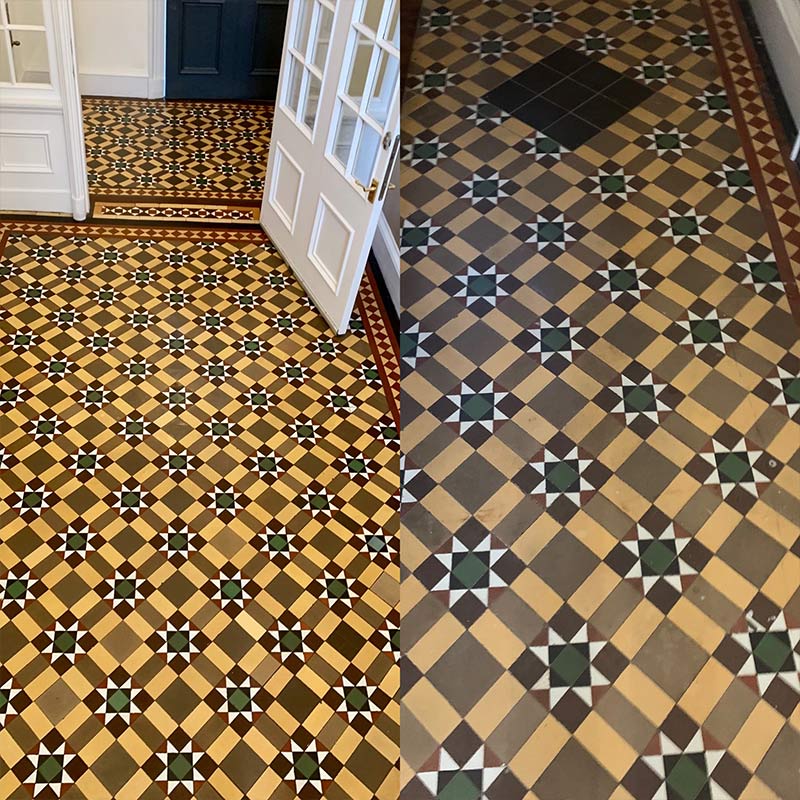
Before and after specialist cleaning of an original Victorian geometric tiled floor, revealing the original colours and pattern.
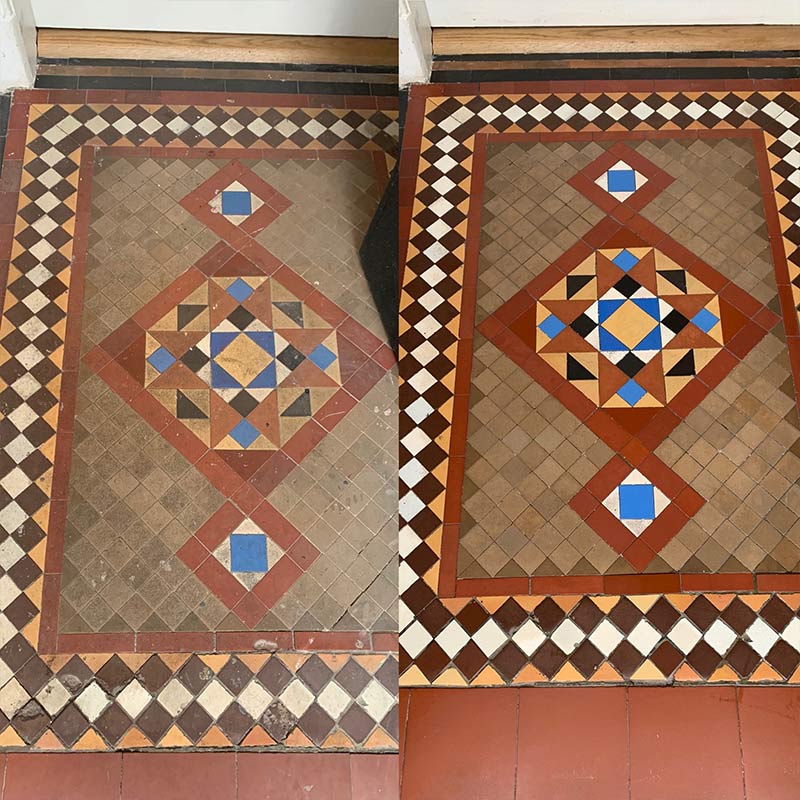
Before and after specialist cleaning of an original Victorian geometric tiled floor, removing years of dirt and revealing the original colours and decorative border.
Common Problems When Cleaning Victorian Floor Tiles
Many original Victorian floor tiles have survived for well over a century, but they can be permanently damaged by unsuitable cleaning methods. While modern ceramic tiles are often cleaned aggressively, historic geometric, encaustic and mosaic floors require a much more sympathetic approach.
The most common problems we see include excessive water soaking into the floor, harsh acidic or alkaline cleaning chemicals, abrasive pads removing the original surface, and failed sealants trapping dirt and moisture beneath the finish.
Before attempting any deep clean, it is worth checking whether the floor has loose tiles, missing sections or previous repairs. If defects are present, these should normally be addressed before intensive cleaning begins. Our guide to repairing missing and damaged Victorian floor tiles explains why this is important.
If an old sealant has failed or become discoloured, removing it correctly before applying a suitable breathable protective finish will usually produce a much better long-term result than simply adding another coat over the top.
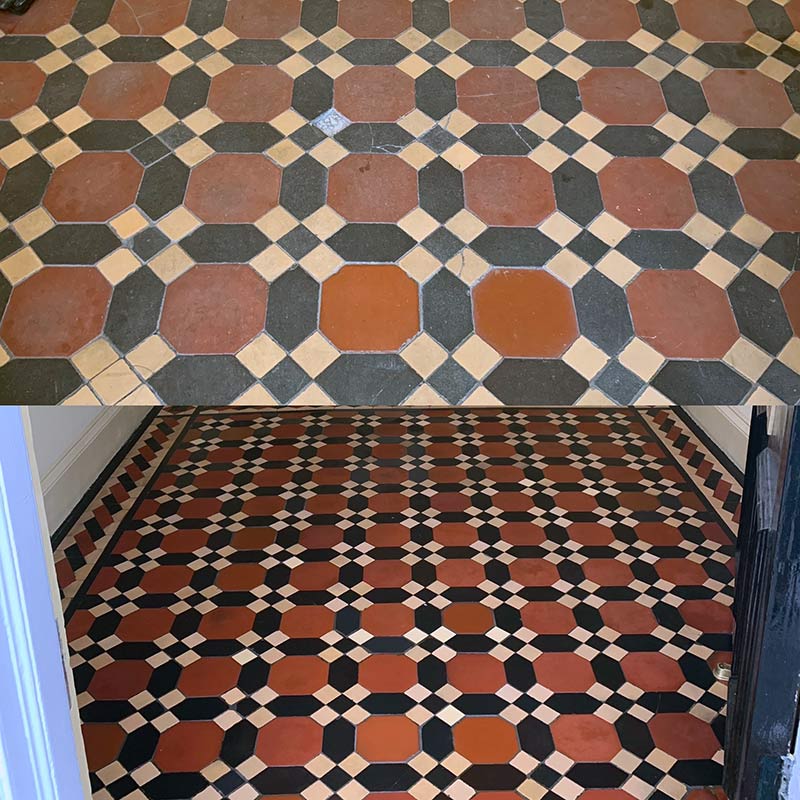
Specialist cleaning of an original Victorian octagonal and dot tiled floor, removing surface contamination and restoring the natural colours of the tiles.
Top Tips for Cleaning Victorian Floor Tiles Safely
Many homeowners successfully carry out light routine cleaning themselves, but the wrong products or techniques can permanently damage original Victorian floor tiles. If you’re unsure, always test a small, inconspicuous area first.
Our general recommendations are:
- Vacuum or sweep regularly to remove abrasive grit.
- Use as little water as possible, avoiding soaking the floor.
- Avoid strong acidic or alkaline cleaners unless you are certain they are suitable for historic tiles.
- Never use aggressive abrasive pads on encaustic tiles, as these can wear away the decorative clay inlay.
- Remove failed sealants before applying a new breathable floor sealant rather than sealing over old coatings.
- If the floor contains loose tiles, hollow areas, cracks or missing sections, it is usually better to repair these before carrying out intensive cleaning. You can read more in our guide to Victorian tile repair and replacement.
For heavily soiled floors with old wax, acrylic sealers, paint residues or carpet adhesive, professional Victorian floor tile restoration will often produce better results while protecting the original historic fabric
Frequently Asked Questions About Cleaning Victorian Floor Tiles
Can I use a steam cleaner on Victorian floor tiles?
Steam cleaning is not always suitable for Victorian floor tiles. While steam may appear gentle, it introduces heat and moisture into the floor, which can affect old lime mortars, bedding layers and previously repaired areas. Floors with loose tiles, failed grout or historic movement should be inspected before steam cleaning is considered.
If your floor is already showing signs of movement or damage, repairing these defects before cleaning is normally the safest approach. See our guide to Victorian tile repair and replacement.
Can I clean Victorian floor tiles with vinegar?
Vinegar should generally be avoided on historic Victorian floor tiles. Although often recommended as a natural cleaner, its acidity can damage lime-based materials, affect old grout and react with certain historic finishes. A pH-neutral cleaner is usually a much safer choice for routine maintenance.
Can I pressure wash a Victorian tiled floor?
No. Pressure washing is rarely appropriate for Victorian geometric or encaustic floor tiles. High-pressure water can force moisture beneath the tiles, loosen grout joints and increase the risk of future failure. Historic floors should be cleaned using methods appropriate to their condition and original construction.
Should I reseal Victorian floor tiles after cleaning?
Only if the existing finish has been removed or has failed. Applying a new sealant over old waxes, acrylic coatings or contamination often traps dirt beneath the surface and produces a poor finish. Choosing the correct breathable floor sealant is just as important as the cleaning itself.
When should I call a professional Victorian tile restorer?
If your floor has loose or hollow tiles, missing sections, deep staining, failed sealants, heavy wax build-up or previous inappropriate repairs, professional restoration is often the most cost-effective option. Specialist cleaning methods can remove years of accumulated contamination while preserving the original historic fabric.
Learn more about our specialist Victorian floor tile restoration services.
What is the best cleaner for Victorian floor tiles?
There is no single cleaner that is suitable for every Victorian floor. The correct product depends on the type of tile, the condition of the floor and the nature of the contamination. For routine maintenance, a pH-neutral cleaner is usually the safest choice, while old wax, acrylic sealers, paint residues and heavy soiling often require specialist treatment. Before applying any cleaning product, it is important to identify any existing coatings and assess whether the floor would benefit from specialist Victorian floor tile cleaning or breathable floor sealants and finishes once cleaning is complete.
If you’re unsure how to clean your Victorian tile floor, or it requires specialist restoration, repairs or replacement tiles, we’re happy to help. We provide expert Victorian tile cleaning, restoration and conservation services throughout Edinburgh, Glasgow and across Scotland. Contact us today for friendly advice or to arrange a quotation.


