Minton Victorian Tiles | History & Restoration
BLOG
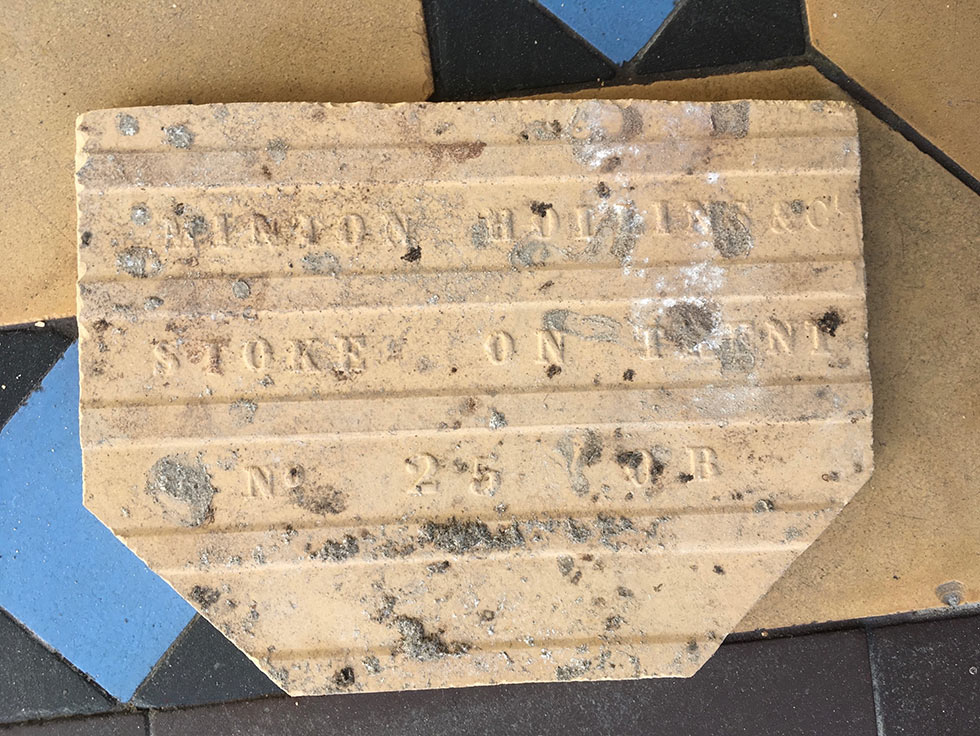
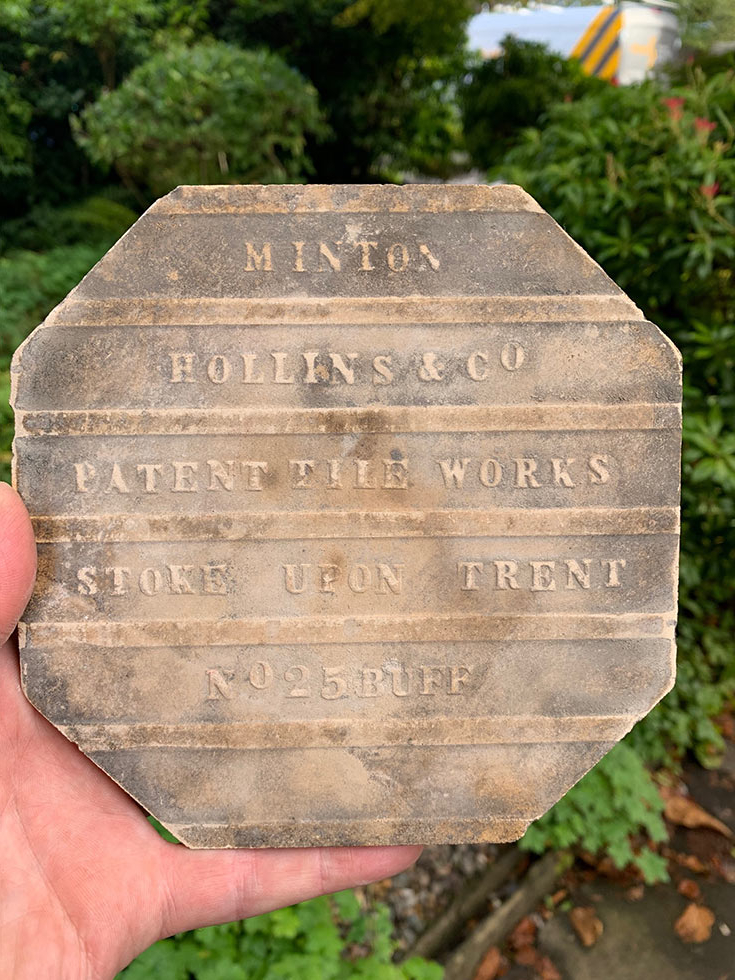
One of the fascinating aspects of original Victorian floor tiles is that many manufacturers impressed their name, works or pattern reference into the reverse of the tile during production. These marks were formed in the mould before firing and can still be clearly seen more than a century later.
During the Victorian period, manufacturers such as Minton, Maw & Co., Craven Dunnill and Campbell produced millions of geometric and encaustic tiles that were installed in churches, public buildings and private homes throughout Britain. Their products became renowned for their durability, craftsmanship and intricate geometric designs, many of which survive remarkably well today. Many of these historic floors can still be preserved through Victorian tile restoration rather than replacement.
During one of our recent Victorian tile restoration projects, we carefully lifted an original Minton floor and discovered the manufacturer’s stamp preserved on the reverse. Finds like this provide a remarkable connection to the craftsmen and factories that produced these historic tiles and offer valuable information when researching the history and authenticity of a Victorian floor.
Victorian geometric floor tiles became one of the defining architectural features of the nineteenth century, appearing in churches, public buildings, railway stations and the entrance halls of homes throughout Britain. Their popularity grew rapidly following advances in industrial production, allowing beautifully designed geometric floors to be manufactured with remarkable accuracy and durability.
Among the most influential manufacturers was Minton & Co. of Stoke-on-Trent, founded by Herbert Minton. During the mid-Victorian period, Minton became internationally renowned for producing geometric and encaustic floor tiles, supplying projects ranging from modest domestic vestibules to cathedrals, civic buildings and royal commissions. Their tiles were admired for their precision, colour consistency and exceptional quality.
Unlike modern ceramic tiles, many original Victorian geometric floor tiles were manufactured from fine clays pressed under enormous pressure before firing at high temperatures. This produced an incredibly hard-wearing tile capable of surviving well over a century of daily use. Many original Minton floors remain in service today, a testament to both the quality of their manufacture and the craftsmanship of the Victorian tilers who installed them.
One fascinating feature found during conservation work is the manufacturer’s stamp on the reverse of many original tiles. These markings often identify the maker, production works and pattern reference, providing valuable information when researching a floor’s history or sourcing authentic replacement tiles for conservation projects.
At Victorian Tile Restoration Edinburgh, we frequently encounter Minton, Maw & Co., Craven Dunnill and other historic manufacturers while carefully lifting and repairing original Victorian floors throughout Scotland. These surviving marks form an important part of the building’s history and are recorded whenever possible during conservation work.
If you have an original Minton, Maw, Craven Dunnill or other historic Victorian tile floor and would like advice on its identification, conservation or repair, we’re happy to help. We specialise in the restoration of Victorian geometric and encaustic tile floors, including historic tile identification, sympathetic repairs, replacement tile matching and conservation cleaning for churches, listed buildings, period properties and heritage projects throughout Edinburgh, Scotland and across the UK. Contact Us to discuss your project, arrange a site visit or request a quotation.